The most powerful medicine already exists
For many years, physical exercise was mainly associated with fitness or athletic performance. Today, scientific research shows something different: movement is one of the most effective tools to prevent and manage many chronic conditions.
Phil Lab was born from this understanding. Our approach is inspired by the World Health Organization's definition of health, which describes it as a state of complete physical, mental, and social well-being.
"Physical exercise is probably the most effective medicine we have for many chronic conditions. Yet it is still the least prescribed."
The great silent epidemic
The main health challenges in Western countries are no longer just acute diseases, but chronic conditions linked to sedentary lifestyles.
- over 40% of Italian adults are sedentary
- around 10 million people suffer from chronic musculoskeletal pain
- more than 3.5 million live with diabetes
For millions of people, the problem isn't doing more sport, but finding a safe and appropriate way to get moving again.
When movement becomes medicine
The core concept at Phil Lab is clinical impact exercise. This isn't just about physical activity, but about designing movement to produce positive, measurable physiological adaptations.
A structured programme can help to:
- · reduce musculoskeletal pain
- · improve metabolic control
- · increase cardiovascular capacity
- · improve balance and coordination
- · support mental health
- · slow functional decline
"There's no such thing as an un-trainable person. Only programmes that aren't adapted to the individual."
Between medicine and the gym
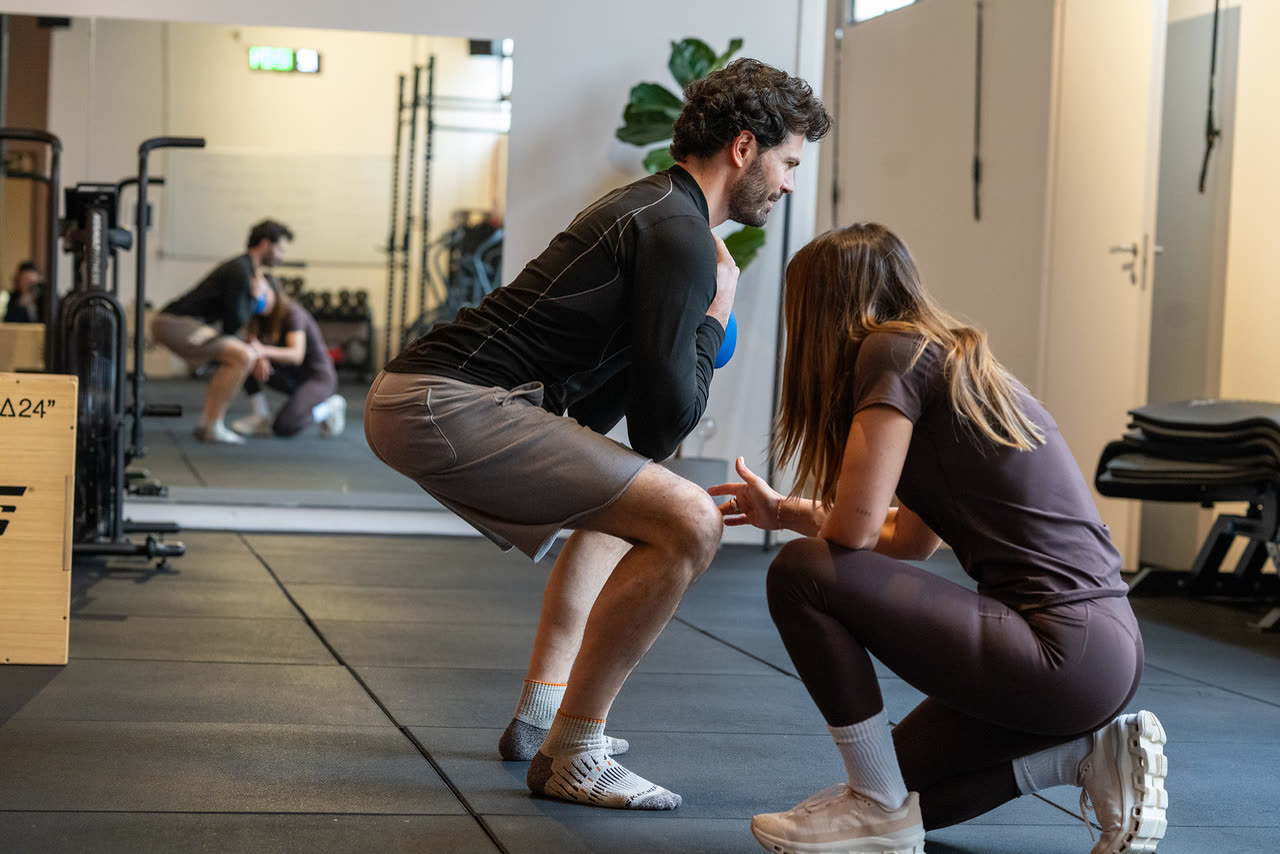
Many people with health issues avoid traditional gyms: they fear worsening their condition or have tried generic programmes without success. Those living with pain or chronic conditions need an initial assessment, personalised programmes, and controlled progressions.
Phil Lab was created to bridge this gap between medicine and physical activity, based on leading international guidelines from the American College of Sports Medicine (ACSM) and the World Health Organization (WHO).
We don't force the person to adapt to the workout. We build the workout around the person.
The adaptable body
The human body has an extraordinary capacity to adapt to stimuli. When it receives an appropriate and progressive load, it is able to improve strength, endurance, and functional capacity.
"The body regenerates through overload. If the load is progressive and controlled, the body improves."Use it or lose it.
Small groups, big focus
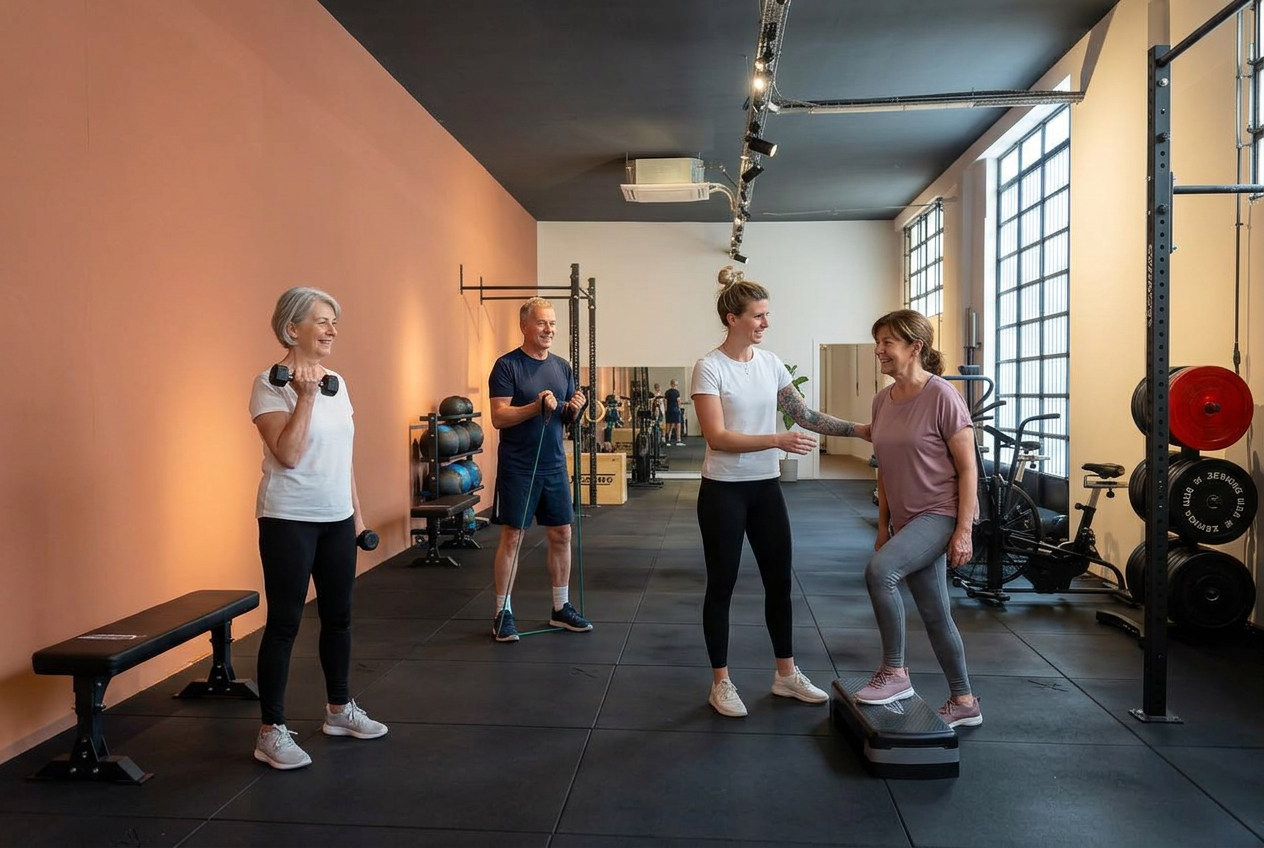
Sessions are held mainly in Small Groups, which allow for close supervision and personalisation. Our Small Groups have a maximum of 4 people (6 for Pilates Matwork classes). A purely one-to-one model would often be too costly; working in small groups allows us to combine quality, attention, and affordability.
What it looks like in practice
All programmes work on a few fundamental movement capacities: strength, endurance, flexibility, and proprioception. Our programmes combine functional training guided by a personal trainer with Pilates classes: strength and endurance through functional work, mobility, control, and body awareness through Pilates.
These are familiar, recognisable activities, but used with a different objective and dosed for the individual to produce safe, positive adaptations.
A new culture of movement
The healthcare system of the coming decades will have to face the rise of chronic diseases linked to a sedentary lifestyle. In this context, correctly designed movement can become one of the most important pillars of future public health.
We need to build a true culture of movement, just as a culture of food has developed in Italy over time.
The most powerful medicine we have is already available. We just need to learn how to use it.
Physical exercise as a first-line treatment
According to major international guidelines – including those from the World Health Organization, the American College of Sports Medicine, the European Society of Cardiology, the American Diabetes Association, the National Institute for Health and Care Excellence (NICE), and other leading scientific bodies – physical exercise is one of the top two recommended treatments for dozens of chronic conditions, often with a level of evidence equal to or greater than that of many drug therapies.
| Clinical Area | Conditions where exercise is a first-line treatment |
|---|---|
| Musculoskeletal | Low back pain, neck pain, mid-back pain, osteoarthritis, tendinopathies, plantar fasciitis, patellofemoral pain syndrome, greater trochanteric pain syndrome, degenerative meniscal tears, rehabilitation after ligament injuries or orthopaedic surgery. |
| Rheumatology | Rheumatoid arthritis, Ankylosing spondylitis, Psoriatic arthritis, Fibromyalgia, Systemic lupus erythematosus, Systemic sclerosis. |
| Metabolism and endocrinology | Prediabetes, Type 2 diabetes mellitus, Obesity, overweight, Metabolic syndrome, Non-alcoholic fatty liver disease, Osteoporosis, osteopenia, sarcopenia. |
| Cardiology | Arterial hypertension, Ischaemic heart disease, recovery after heart attack, bypass or angioplasty, Stable heart failure, Peripheral artery disease, intermittent claudication, dyslipidaemia. |
| Pulmonology | Chronic obstructive pulmonary disease (COPD), Asthma, bronchiectasis, pulmonary fibrosis, Long COVID with reduced functional capacity. |
| Neurology | Parkinson's disease, Multiple sclerosis, post-stroke recovery, peripheral neuropathies, ataxias, balance disorders, essential tremor, mild cognitive impairment. |
| Geriatrics | Frailty, sarcopenia, recurrent falls, loss of autonomy, reduced aerobic capacity. |
| Oncology | Cancer-related fatigue, recovery after surgery, during and after chemotherapy, during and after radiotherapy, lymphoedema, cachexia in selected patients. |
| Psychiatry | Major depression, dysthymia, anxiety disorders, panic disorder, burnout, post-traumatic stress disorder (PTSD). |
| Sleep Medicine | Insomnia, Obstructive sleep apnoea. |
| Gynaecology | Menopause, post-menopausal osteoporosis, stress urinary incontinence, post-partum recovery, Polycystic ovary syndrome (PCOS). |
| Urology | Urinary incontinence, recovery after prostatectomy, chronic pelvic pain, vascular erectile dysfunction. |
| Gastroenterology | Non-alcoholic fatty liver disease, Irritable bowel syndrome (IBS), chronic constipation, obesity. |
| Paediatrics | Childhood obesity, motor development delay, developmental coordination disorder. |
| Angiology | Chronic venous insufficiency, lymphoedema, Peripheral artery disease. |