Repeat, Don't Burn Out
For years, mainstream culture has equated performance with a single moment of maximum intensity: the race, the record, the peak. But for the vast majority of people, true performance is something else entirely: maintaining a strong, responsive body that can handle the demands of sport, work, and life over the long term.
Lasting performance isn't a lesser compromise. It's the only sustainable training model for anyone who wants to keep doing what they love at 40, 50, and 60.
"Lasting performance is born from the balance between strength, flexibility, endurance, and proprioception."
Strength, Flexibility, Endurance, Proprioception
Lasting performance isn't just about strength. It's the balance of four fundamental qualities that benefit everyone, not just athletes: protecting your joints, supporting your metabolism, moving with freedom, and maintaining your autonomy over time.
Our work is built on four key pillars:
- Functional strength — the muscular fitness to handle daily life, from climbing stairs to carrying heavy loads, with solid technique and without giving way.
- Flexibility and mobility — joint range of motion, active control, and freedom from chronic tension: moving well before moving more.
- Cardiorespiratory endurance — a heart, lungs, and energy system trained sustainably, to get you through the day without burning out.
- Proprioception and neuromuscular control — body awareness, balance, and coordination: the foundations for preventing injury and ageing gracefully.
The Principle of Progressive Overload
The body improves when it receives a stimulus that's slightly greater than what it's used to—and when it has time to recover. Every programme is designed for controlled advancement, with loads that increase over time and planned deload periods.
It's the opposite of occasional high-intensity training: no destructive sessions, no chasing the burn. Just consistency, progression, and recovery.

Injury Prevention
Anyone who trains seriously knows the problem: sooner or later, something gives. Knees, shoulders, back. Most injuries aren't random—they're the result of muscular imbalances, poor mobility, and overly aggressive progressions.
Our initial assessment identifies weak points before they become injuries. Pilates complements strength work with active mobility, core control, and movement awareness—the very qualities that separate a long-lasting athlete from a finished one.
How We Train
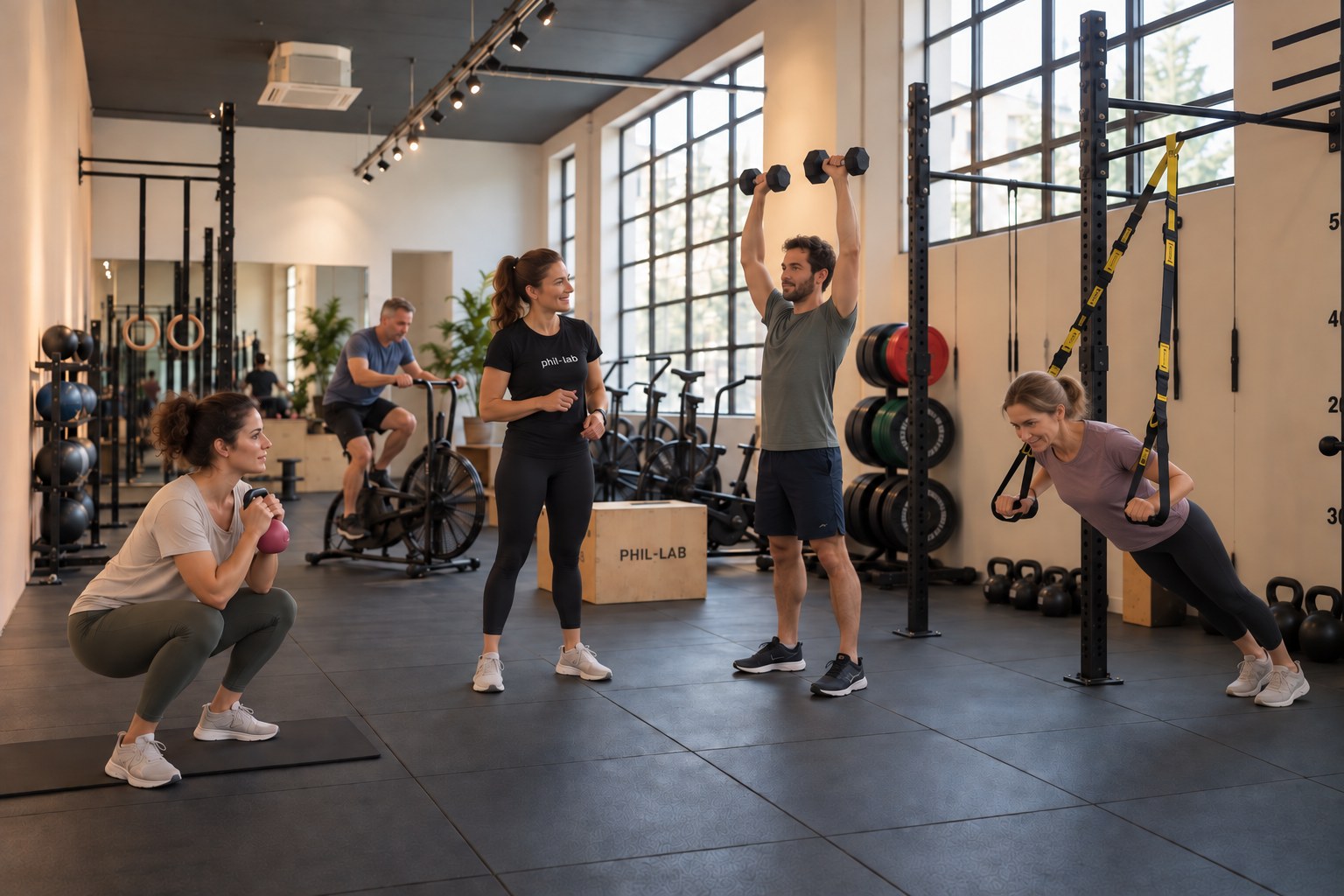
Our programmes combine functional work with a personal trainer(strength, mobility, endurance, proprioception) and Pilates Matwork or Reformer sessions (control, breathing, flexibility). We offer Small Group training for a maximum of 4 people (6 for Pilates Matwork classes) or one-to-one personal training, always with a personalised programme based on your initial assessment.
The goal isn't to make you sweat more. It's to build you a resilient, flexible, and responsive body, suitable for all levels and all ages.
"Not the athlete who wins once. The person who's still here, still fit, ten years from now."
