The Silent Cost of Modern Life
Hours spent sitting, artificial light, constant notifications, misaligned sleep-wake cycles, and irregular eating habits. The body of a city dweller is no longer simply out of shape: it's chronically overstimulated.
The sympathetic nervous system—the one that prepares us for action—stays switched on for too long. The parasympathetic system—which allows us to recover, digest, and sleep—struggles to take over. The result is a cocktail of symptoms that often lack a specific name but drain our energy daily.
The Signals
- recurring neck and lower back pain
- morning joint stiffness
- jaw tension, headaches
- shortness of breath, unconscious breath-holding
- fatigue that doesn't improve with rest
- fragmented sleep, waking up at night
- chronic digestive issues
- a constant feeling of being "under pressure"
These aren't illnesses. They are the body's way of communicating that the balance between load and recovery has been broken.
Move to Regulate, Not to Deplete
The answer to an overstimulated system is not more intensity. A HIIT session after a stressful day just adds stimulation on top of stimulation: the body burns out, it doesn't repair.
Our approach works on four key principles:
- Calibrated Strength — enough to stimulate positive adaptations (metabolism, bone density, muscle tone) without generating excessive stress.
- Active Mobility and Pilates — to restore joint range of motion, release chronic tension, and rebuild body awareness.
- Breathwork and Neuromotor Control — diaphragmatic breathing is the most direct way to down-regulate the sympathetic system and activate the parasympathetic response.
- Slow, Tangible Progression — small, measurable improvements over time, without devastating weeks followed by months of inactivity.
"Wellbeing isn't the absence of stimulus: it's the ability to adapt."
Joint Pain: What Really Makes a Difference
Most chronic joint pain (in the neck, lower back, shoulder, or knee) doesn't stem from a serious structural issue, but from a mix of muscle weakness, poor mobility, and incorrect repetitive use. Calibrated exercise is the most evidence-based intervention for managing it—more effective than rest, medication, or passive therapies in most cases.
Our work always starts with an assessment: we identify where load is being poorly distributed, which muscles aren't doing their job, and which movement patterns need to be relearned.
What a Typical Programme Looks Like
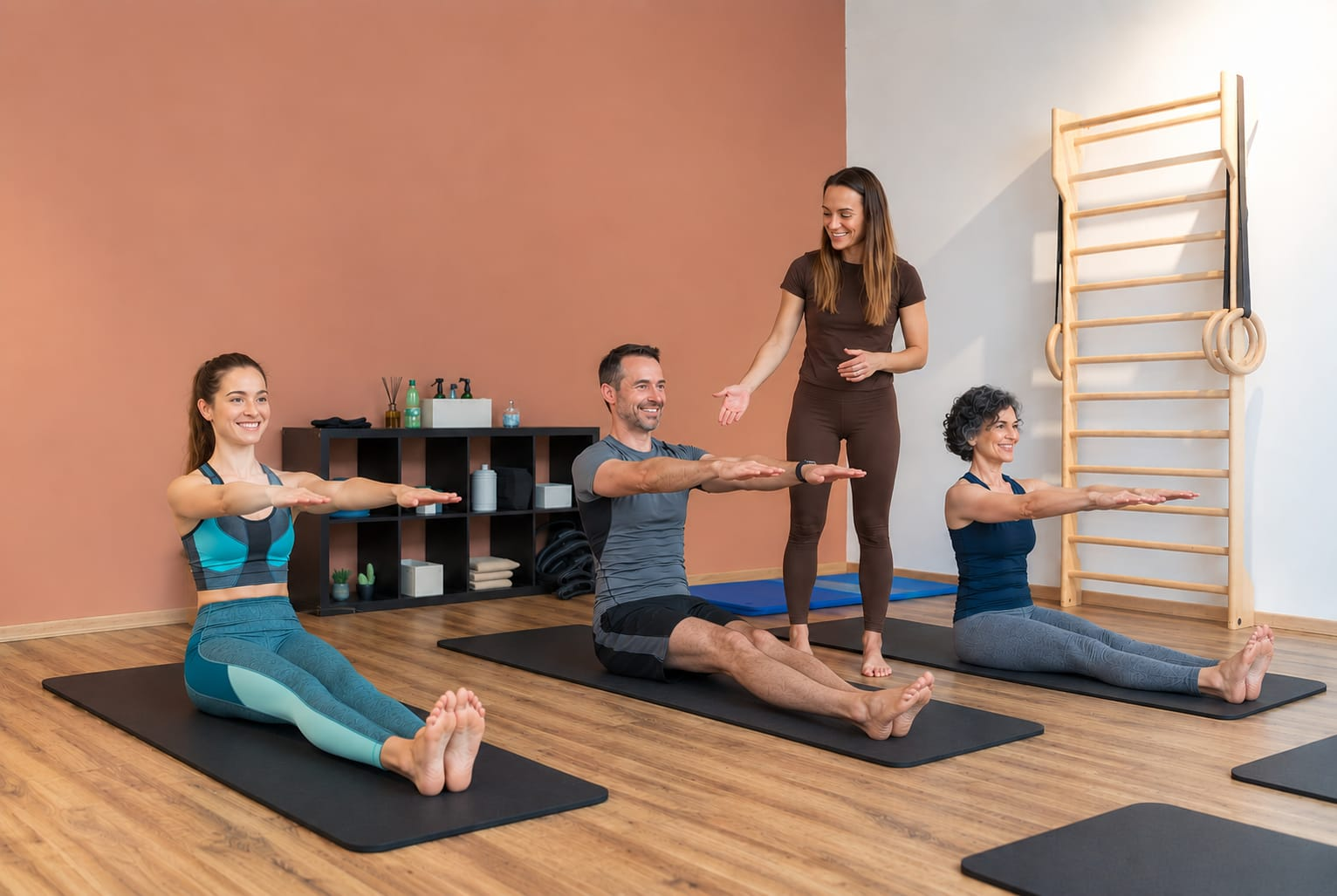
The most common format combines a weekly functional training session in a small group with a Pilates session (Matwork or Reformer). Our small groups have a maximum of 4 people (6 for Pilates Matwork classes), always with an individualised programme. Those who need more focused attention can add personal training sessions.
The goal isn't to turn you into an athlete. It's to give you back a body that moves with ease, sleeps better, and can handle the demands of the day—without paying for it for the next three days.
"The best form of rest isn't stillness. It's the right kind of movement."
